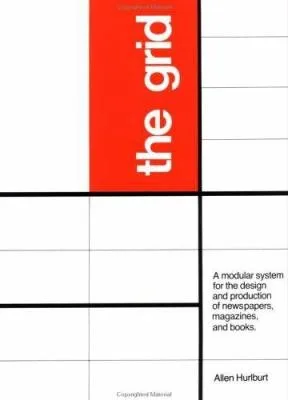
Allen Hurlburt examines the mathematical and visual logic behind page layout in graphic design. The text outlines the progression from traditional manuscript conventions to the structured asymmetry popularized by the Bauhaus and the International Typographic Style. Hurlburt details specific technical frameworks, including the golden section, modular divisions, and the use of multi-column systems for complex editorial content. Through case studies and diagrams, he demonstrates how these geometric underpinnings organize typography, photography, and white space to achieve clarity and visual hierarchy across printed media.
Professional designers and students of visual communication read this work to master the underlying mechanics of professional composition. The book provides a practical guide for organizing information logically while maintaining aesthetic balance. Readers finish the text with a functional understanding of how to construct and adapt grids for diverse formats, including magazines, newspapers, and corporate identity programs. It offers a structured approach to problem-solving that replaces guesswork with precise spatial planning and consistent proportional relationships.
- Published
- 1978
- Publisher
- John Wiley & Sons
- ISBN
- 9780471289234
- Language
- EN