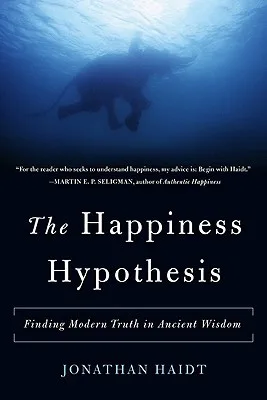
The Happiness Hypothesis: Finding Modern Truth in Ancient Wisdom
Jonathan Haidt uses the metaphor of a wild elephant and its rider to explain the tension between the emotional, instinctive brain and the logical, rational mind. He examines ten ancient ideas from civilizations including Greece, India, and China, testing their validity against contemporary psychological research on neurobiology and evolution. The text details how the human mind is divided into competing parts and explains why willpower often fails to control subconscious urges. Haidt addresses the chemical processes behind social bonds, the role of adversity in developing resilience, and the biological roots of human morality and divinity.
This book is intended for readers who want to understand the mechanics of their own biases and emotional reactions using a scientific framework. It attracts people interested in the intersection of philosophy and cognitive science who seek specific methods for improving their mental well-being. Readers learn how to adjust their internal setting points through meditation, cognitive therapy, and medication. The final chapters provide a definition of happiness that results from establishing the right relationships between the self and others, one’s work, and something larger than the individual.
- Published
- 2006
- Language
- EN
More by Jonathan Haidt
See all →