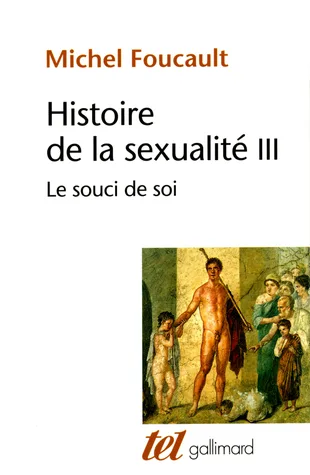
The History of Sexuality, Volume 1: An Introduction
Michel Foucault challenges the repressive hypothesis, which argues that Western society has silenced talk of sex since the Victorian era. He contends that discourse concerning sexuality actually intensified through institutional mechanisms like medical psychiatry and the Catholic confession. The text introduces the concept of biopower, explaining how modern states manage populations by monitoring biological processes and bodily behaviors. Foucault replaces the traditional model of top-down sovereign power with a decentralized framework where power functions through surveillance, categorization, and the internal regulation of the self.
This work serves scholars of sociology, political theory, and gender studies who seek to understand how social institutions shape individual identity. Readers gain a framework for analyzing how scientific knowledge and legal systems produce the categories of "normal" and "deviant." The book provides a method for tracing the historical origins of modern sexual labels, teaching the reader to view personal desires as products of specific historical power dynamics rather than innate biological truths. Through this lens, the reader learns to question the neutrality of professional expertise and state administration.
- Published
- 1976
- Language
- EN