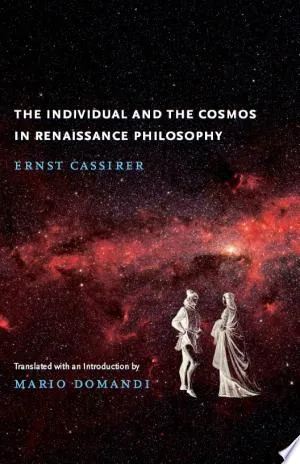
Ernst Cassirer analyzes the intellectual shift from medieval scholasticism to modern subjectivity through the work of Nicholas Cusanus. He argues that Cusanus established a new relationship between the human mind and the infinite universe, breaking from rigid hierarchies. The text examines how thinkers like Leonardo da Vinci, Galileo, and Pico della Mirandola redefined the "subject-object" problem, positioning individual consciousness as a constructive force in understanding nature. Cassirer details specific tensions between human freedom and cosmic necessity, showing how artistic perspective and mathematical science emerged from this philosophical realignment.
This volume serves historians of ideas and philosophy students who require a technical map of early modern European thought. Readers gain a precise understanding of how the Renaissance bridged the gap between mystical theology and empirical science. By tracking the development of logic, art theory, and cosmology, the audience learns to identify the specific mental frameworks that allowed the individual to become the central observer of the physical world. It provides a rigorous blueprint of the transition to modern rationalism.
Deep and open-ended; a demanding read.
Best for readers like The Deep Diver. Which reader are you?
- Published
- 2010
- Publisher
- University of Chicago Press
- ISBN
- 9780226096070
- Language
- EN