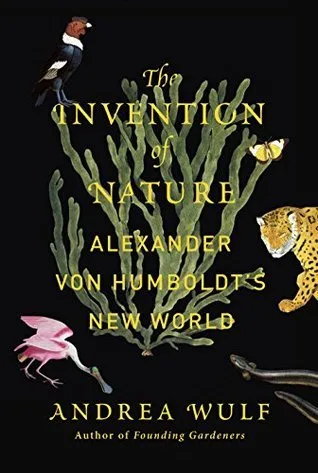
The Invention of Nature: Alexander von Humboldt's New World
Andrea Wulf chronicles the life of Alexander von Humboldt, the nineteenth-century Prussian naturalist who envisioned the earth as a single living organism where all biological and physical forces are interconnected. The narrative follows his five-year expedition through South America, where he mapped the distribution of plants across climate zones on Mount Chimborazo and documented how colonial deforestation altered local humidity and rainfall. Wulf details how Humboldt’s holistic "web of life" concept laid the scientific foundations for ecology and influenced the later work of Charles Darwin, Henry David Thoreau, and John Muir.
Readers of natural history and botanical biography will find a technical history of how modern environmentalism began. The text appeals to those interested in the crossover between scientific empirical observation and Romantic philosophy. You finish the book with a clear understanding of how human-induced climate change was first identified in the 1800s. It provides a factual lineages of how specific geographic data collection evolved into our current global perception of ecosystems and environmental protection.
- Published
- 2015
- Language
- EN