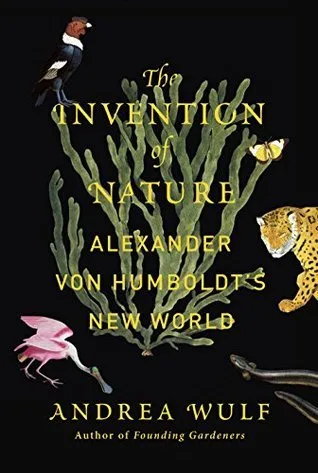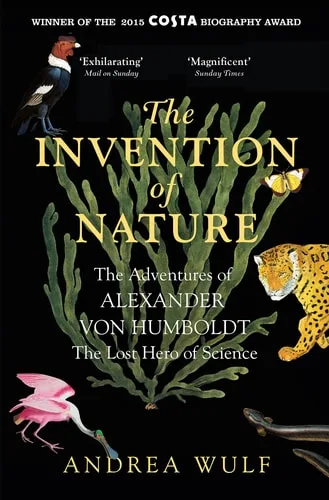
The Invention of Nature The Adventures of Alexander Von Humboldt, the Lost Hero of Science
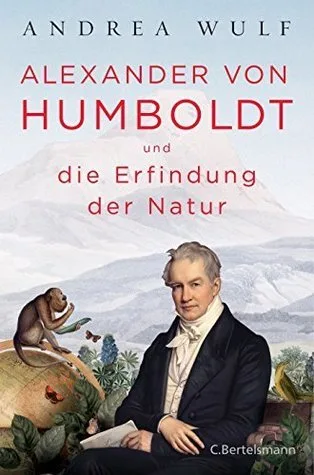
Andrea Wulf reconstructs the life of Alexander von Humboldt, focusing on his foundational realization that the Earth functions as a single, living organism. The narrative follows his grueling expedition through South American rainforests and Andean peaks, where he recorded climate data and botanical patterns to map the distribution of plant life across global zones. This work established the basis for modern ecology and climate science, directly influencing Charles Darwin’s evolutionary theories and Henry David Thoreau’s observations on seasonal shifts and wilderness preservation.
Environmentalists and historians of science read this book to trace the origins of ecological thought back to the early nineteenth century. Readers gain a clear understanding of how Humboldt’s multidisciplinary data collection linked human activity to local climate change and deforestation. The text provides a historical framework for the interconnectedness of global systems, showing how early scientific observations built the current vocabulary for biodiversity and atmospheric protection.
Insights from The Invention of Nature The Adventures of Alexander Von Humboldt, the Lost Hero of Science
“Everything is interconnected. When one thread is pulled, the whole tapestry may unravel.”
Humanity started changing the climate way earlier than I thought. Humboldt saw it happening in Venezuela back in 1800. He linked de-forestation directly to local temperature shifts.
“I shall never be able to describe the impression which the first sight of the sea produced upon me.”
Darwin wouldn't have boarded the Beagle without reading Humboldt first. He kept those travel journals by his bed. Most of modern biology started as a fan letter to this one guy.
“Nature is a living whole, not a dead aggregate.”
Nature isn't a collection of separate parts. It is a single living pulse. Humboldt was the first to see the world as one giant organism.
“What is a man without a sense of nature?”
He climbed Chimborazo without modern gear or oxygen. He was bleeding from his feet and still taking barometric readings. That kind of obsession is terrifying and beautiful.
- Published
- 2015
- Publisher
- John Murray
- ISBN
- 9781848549005
- Language
- EN