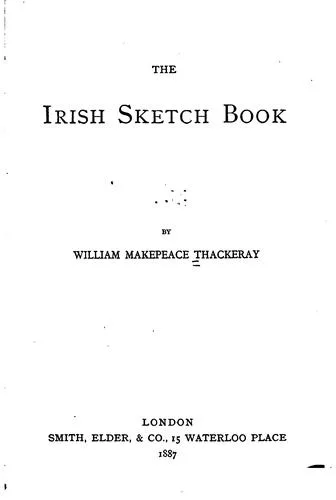
William Makepeace Thackeray documents his 1842 tour of Ireland, recording detailed observations of agricultural practices, urban architecture, and social stratification. He focuses on the economic disparities between the Anglo-Irish gentry and the rural tenantry, describing the physical conditions of workhouses, jails, and public markets. The narrative tracks his movement through Cork, Galway, and Dublin, noting specific religious tensions and the political influence of Daniel O'Connell. Thackeray utilizes a cynical, observational lens to catalog local customs, the state of the potato crop, and the logistical realities of Victorian-era carriage travel.
History enthusiasts and cultural researchers read this work to gain a firsthand account of Ireland shortly before the Great Famine. It serves as a primary source for understanding the colonial British perspective on 19th-century Irish identity and infrastructure. Readers walk away with a mapped layout of Irish city life and a technical understanding of the period's class systems. The text provides a pragmatic look at the administrative failures and social hierarchies that defined the country during the mid-1800s.
Outward-looking; a moderate read.
Best for readers like The Evidence Seeker. Which reader are you?
- Published
- 1843
- Language
- EN