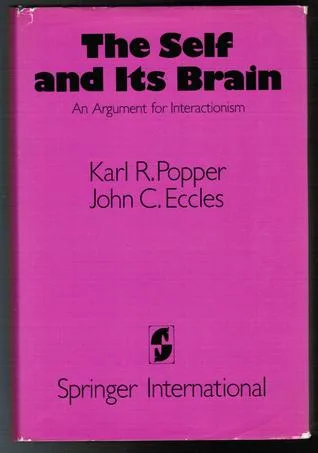
Karl Popper challenges the traditional view that science proceeds through inductive reasoning. He argues that no number of successful observations can prove a universal theory true, but a single counterexample can prove it false. This framework defines falsifiability as the criterion for demarcating science from pseudoscience. Instead of seeking verification, scientists should formulate bold hypotheses and subject them to rigorous testing. Popper examines the roles of probability, simplicity, and empirical content, concluding that scientific progress occurs through the systematic elimination of errors rather than the accumulation of certainty.
This text attracts philosophers, research scientists, and students of epistemology who want to understand the boundary between empirical inquiry and metaphysics. Readers gain a technical vocabulary for analyzing the validity of theoretical claims and the structure of objective knowledge. The book provides a method for evaluating evidence that prioritizes logical rigor over subjective belief. Those who finish it walk away with a functional model for designing experiments that aim to challenge existing paradigms rather than merely confirm them.
- Published
- 1934
- Language
- EN