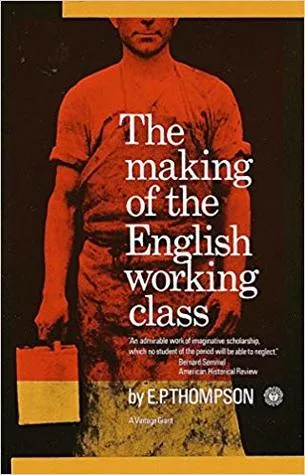
Between 1780 and 1832, the English artisan and laborer transformed into a self-conscious social class. E.P. Thompson argues that class is not a static mathematical category or a structural inevitability of the industrial revolution, but an active process of self-creation. The text examines the radical traditions of the London Corresponding Society, the collective resistance of Luddite machine-breakers, and the influence of Methodist discipline on factory morale. Thompson rejects the notion of workers as passive victims of steam power, instead detailing how they used inherited notions of "Englishmen’s rights" to build trade unions and political identities.
Political historians and sociology students read this work to understand the shift from local riots to organized national movements. The book provides a methodology for recovering the lived experiences of marginalized groups who left few formal records. Readers walk away with a specific framework for analyzing how cultural traditions, communal rituals, and shared grievances solidify into political agency. It changes how an observer interprets the relationship between economic shifts and the human agency that responds to them.
- Published
- 1963
- Language
- EN
Readers also enjoyed