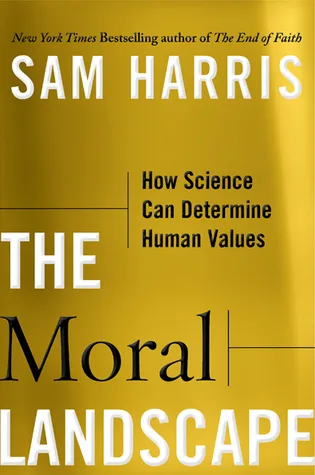
The Moral Landscape: How Science Can Determine Human Values
Sam Harris argues that human values and morality are not merely matters of personal opinion or cultural tradition, but are objective facts about the well-being of conscious creatures. He proposes a framework called the moral landscape, where peaks represent states of maximal flourishing and valleys represent deepest suffering. Using neuroscience and evolutionary biology, Harris asserts that because the brain is a physical system, its states can be measured and influenced by external conditions. He rejects the secular consensus that science has nothing to say about ethics, claiming instead that we can use empirical data to identify which social practices and behaviors quantifiably improve or diminish human life.
This book targets readers interested in secular ethics, atheism, and the intersection of biology and philosophy. It appeals to those who are dissatisfied with moral relativism and seek a logical foundation for universal human rights that does not rely on religious dogma. Readers finish the text with a perspective on how brain chemistry and environmental factors dictate the quality of a person’s experience. They gain a method for analyzing moral questions through the lens of cognitive science, moving from abstract philosophical debate toward an evidence-based approach to social policy and individual conduct.
Deep and outward-looking; a moderate read.
Best for readers like The Systems Thinker. Which reader are you?
- Published
- 2010
- Language
- EN