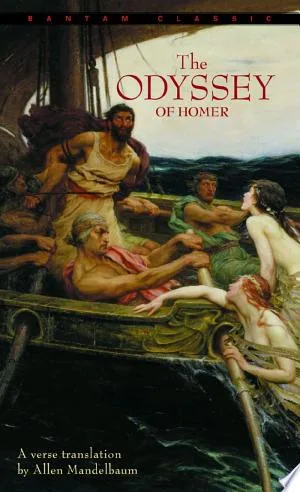
Following the destruction of Troy, the Greek king Odysseus begins a ten-year voyage to reach his home in Ithaca. His progress is obstructed by the sea god Poseidon, who punishes Odysseus for blinding the Cyclops Polyphemus. While Odysseus faces lethal threats from the Sirens, the six-headed Scylla, and the goddess Calypso, his wife Penelope employs stalling tactics to fend off a violent group of suitors occupying their palace. The narrative follows Odysseus as he utilizes tactical deception and physical endurance to reclaim his throne and family.
Readers of ancient history and epic poetry study this text to understand the Mediterranean social codes of hospitality, vengeance, and divine intervention. It serves as a foundational study of the oral tradition, showcasing the transition from mythic history to scripted literature. Those who finish the poem gain a technical understanding of the non-linear flashback structure and the specific heroic archetypes that define Western storytelling. The text provides a direct look at the Bronze Age warrior culture and its reliance on cunning over sheer force.
Deep; a demanding read.
Best for readers like The Deep Diver. Which reader are you?
Insights from The Odyssey
“He wagged his tail, but had no strength to move nearer.”
Argos was just a dog waiting on a dung heap. He stayed alive just long enough to see his master one last time.
“I would rather be a paid servant than king of all the dead.”
Odysseus had to visit the dead to learn how to live. Even a hero feels small when he sees the shadows of his friends.
“My heart is pinned to the ground.”
Odysseus spent ten years trying to get home. He survived monsters but almost lost his mind to comfort on Calypso's island.
“There is a time for many words, and there is also a time for sleep.”
Penelope waited twenty years for her husband. She stayed sharp despite the men trashing her house and demanding her hand.
- Language
- EN