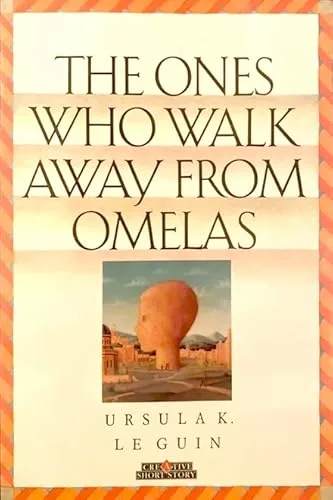
Ursula K. Le Guin presents the city of Omelas during its summer festival, describing a society defined by a state of absolute, collective happiness. The architecture, music, and social harmony of the citizenry depend entirely on a single condition: one child must live in total filth, darkness, and misery within a locked basement. Every citizen eventually learns that their prosperity is a direct exchange for this individual’s torture. While most accept this utilitarian bargain to preserve the common good, select individuals choose to leave the gates of the city alone.
Readers interested in political philosophy and ethics use this story to analyze the limits of utilitarianism and the price of social stability. The text functions as a thought experiment regarding collective guilt and the individual's responsibility when benefiting from systemic injustice. A reader finishes the work with a specific framework for questioning what degree of suffering they find acceptable in their own society. It provides a stark visualization of the choice between complicity in a functional utopia and the uncertain path of moral exile.
- Published
- 1973
- Language
- EN