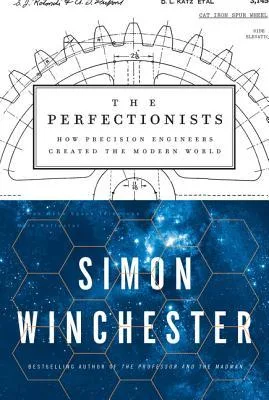
The Perfectionists: How Precision Engineers Created the Modern World
Simon Winchester traces the evolution of precision engineering from the Industrial Revolution to the silicon era. He details the development of tolerances, moving from the crude thousandths of an inch required for James Watt’s steam engine to the nanometer scales used in contemporary microchips. The narrative focuses on specific historical figures like Joseph Whitworth, who standardized screw threads, and Henry Maudslay, whose lathe enabled identical metal parts. Winchester explains how the achievement of absolute exactitude allowed for interchangeable components, jet engines, and the Global Positioning System.
Engineers, historians, and enthusiasts of mechanical design read this book to understand the hidden physical standards that underpin modern infrastructure. The reader walks away with a technical perspective on how shrinking margins of error dictated the trajectory of human technology. It provides a clear framework for seeing how the transition from craftsmanship to machine-made accuracy reshaped global manufacturing and daily life. It appeals to those curious about the material realities behind digital and mechanical systems.
Outward-looking and clear-cut; a moderate read.
Best for readers like The Evidence Seeker. Which reader are you?
- Published
- 2018
- Language
- EN
More by Simon Winchester
See all →




Books like The Perfectionists: How Precision Engineers Created the Modern World
See all 12 →