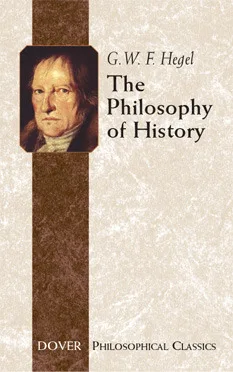
Hegel argues that world history follows a rational trajectory toward the actualization of human freedom. He outlines a teleological framework where the World Spirit, or Weltgeist, manifests through a succession of civilizations, moving from the Oriental world to the Greek, Roman, and finally the Germanic-Christian periods. In this system, the "State" represents the objective realization of liberty, while individuals act as unconscious agents of the "Cunning of Reason." Hegel interprets historical events not as random occurrences, but as a dialectical process where the Spirit attains self-consciousness through struggle and cultural evolution.
This text serves students of political theory and classical German idealism who want to understand the origins of historical determinism. Readers gain a structural lens to analyze how institutional structures and legal codes evolve over centuries. By engaging with this work, scholars grasp how Hegel’s dialectic influenced later Marxist thought and modern views on social progress. It provides a technical vocabulary for discussing the relationship between individual agency and the inevitable movements of large-scale geopolitical shifts.
- Published
- 1831
- Language
- EN