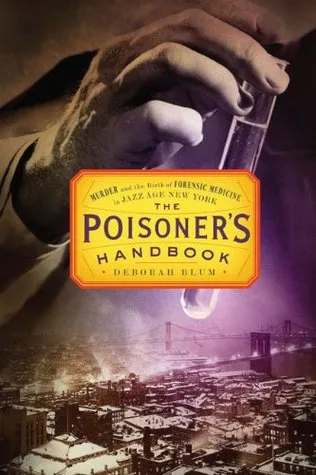
The Poisoner's Handbook: Murder and the Birth of Forensic Medicine in Jazz Age New York
In Jazz Age New York, poison was the perfect weapon because medical examiners lacked the chemical knowledge to detect it in human tissue. Deborah Blum chronicles the partnership between visionary Chief Medical Examiner Charles Norris and toxicologist Alexander Gettler as they professionalized forensic investigation. Each chapter focuses on a specific lethal substance, such as arsenic, wood alcohol, or radium, detailing how these scientists developed laboratory protocols to identify toxins. Their work unfolded against the backdrop of Prohibition, where government-mandated additives in industrial alcohol led to thousands of deaths, turning the city laboratory into a frontline against both private murderers and state policy.
This book serves readers interested in the intersection of chemistry and criminal justice. It provides a technical look at how industrialization introduced new hazards to urban life and how the legal system evolved to accept scientific evidence. Readers walk away with a functional understanding of molecular pathology and a historical perspective on how public health regulations were born from the necessity of stopping untraceable homicides. It appeals to those who prioritize factual, data-driven accounts of scientific progress and the history of municipal governance.
Outward-looking and clear-cut; a moderate read.
Best for readers like The Evidence Seeker. Which reader are you?
- Published
- 2010
- Language
- EN