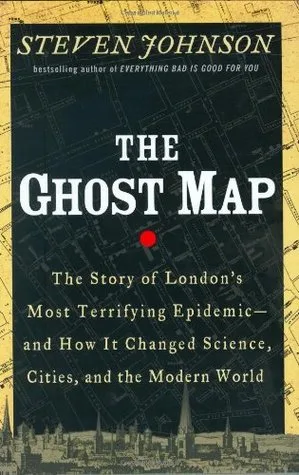
In 1854, a severe cholera outbreak decimated the Soho district of London, challenging the prevailing medical belief that diseases spread through foul air, known as miasma. Steven Johnson reconstructs how physician John Snow and clergyman Henry Whitehead tracked the contagion to a specific contaminated water pump on Broad Street. By plotting deaths on a physical map and conducting door-to-door interviews, they combined local knowledge with data visualization to prove the waterborne nature of the bacteria. The narrative connects this specific crisis to the broader evolution of urban infrastructure, waste management systems, and the birth of modern epidemiology.
Urban planners, historians, and public health professionals read this work to understand how high-density living necessitates sophisticated scientific monitoring. It appeals to those interested in the history of medicine and the ways information mapping solves complex logistical problems. Readers walk away with a clear understanding of how decentralized data collection overturned scientific dogma. The book provides a technical perspective on how cities survive infectious threats through engineering and rigorous statistical analysis, highlighting the relationship between human settlement patterns and microbial life.
- Published
- 2006
- Language
- EN
More by Steven Johnson
See all →