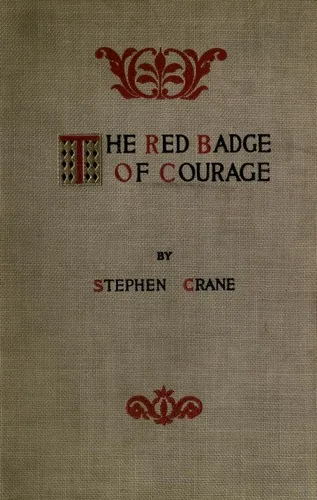
Henry Fleming is a young Union private during the American Civil War who enlists with romanticized visions of heroic combat. Instead of finding immediate glory, he experiences paralyzing fear during his first engagement and flees the battlefield. The narrative follows his psychological internal struggle as he grapples with shame and the desire for a physical wound—a red badge of courage—to hide his perceived cowardice. Through visceral descriptions of noise, smoke, and chaotic movement, the story focuses on Henry’s transition from a naive youth to a veteran who learns to navigate the indifferent mechanics of modern warfare.
This book serves students of military history and psychological realism who want to understand the sensory experience of a common soldier. Readers walk away with a stark perspective on how adrenaline and instinct override conscious moral choices during combat. It provides a look at the disconnect between official wartime propaganda and the frantic, confusing reality of the front lines. Those interested in the evolution of American literature read it to observe the shift toward naturalism and the focus on internal mental states over traditional plot-driven heroics.
- Published
- 1855
- Language
- EN
![The United States in Literature [with three long stories] -- Seventh Edition](https://kwbjoqloympvbpzbrfja.supabase.co/storage/v1/object/public/scan-images/catalog/f48162c6-7eb5-41ec-933b-9c4218489c7d-full.webp)