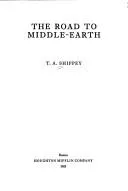
Tom Shippey argues that J.R.R. Tolkien’s fiction grew directly from his professional work as a philologist. The text tracks how specific Old English and Old Norse words, such as "orc," "elf," and "ent," provided the seeds for Middle-earth’s mythology. Shippey explains how Tolkien reconstructed lost Germanic worldviews by treating language as a historical fossil. The book details the linguistic mechanics behind the creation of the Council of Elrond, the structure of the Riddles in the Dark, and the internal logic of the various invented dialects.
Readers of literary criticism and fans of high fantasy read this book to understand the technical underpinnings of the genre. It provides a methodical look at how ancient poetry and etymologies function as architectural blueprints for world-building. A reader walks away with a clear comprehension of "philological inquiry" as a creative tool. They learn exactly how archaic grammar and forgotten vocabulary names shaped the characters and landscapes of Tolkien’s legends into a cohesive, historically grounded reality.
Deep; a moderate read.
Best for readers like The Deep Diver. Which reader are you?
- Published
- 1982
- Language
- EN