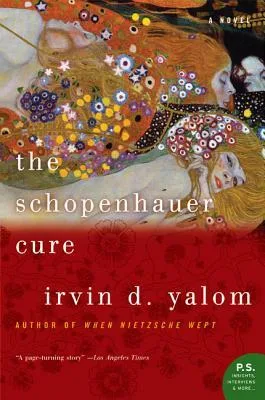
Psychotherapist Julius Hertzfeld discovers he has terminal skin cancer, prompting him to evaluate his professional legacy through one final challenge. He reconnects with Philip Slate, a former patient whom he failed to help twenty years prior. Philip, once a sex addict, now claims to have cured himself through the pessimistic philosophy of Arthur Schopenhauer and seeks Julius’s supervision to become a counselor. Julius invites him into his therapy group, where the narrative alternates between the group’s interpersonal friction and biographical sketches of Schopenhauer’s isolated life. The story examines the tension between intellectual detachment and the messy necessity of human connection during biological decline.
This book serves clinicians and students of psychotherapy who want to see group dynamics and the mechanics of the "here-and-now" intervention applied in a narrative setting. Readers interested in how 19th-century philosophy provides a framework for modern psychological resilience will find a practical integration of Schopenhauer’s ideas on suffering and will. You finish the book with a clearer understanding of how mortality forces a shift from abstract theory toward immediate social intimacy and emotional honesty.
- Published
- 2005
- Language
- EN