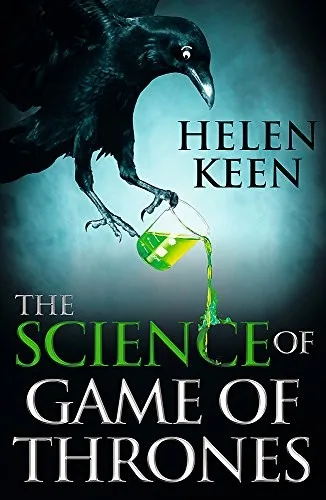
Helen Keen investigates the technical and historical realities behind George R.R. Martin’s fictional universe. She examines how medieval chemistry created wildfire, the biomechanics required for dragons to achieve flight, and the metallurgical properties of real-world Damascus steel compared to Valyrian metal. The text analyzes the psychological science of incestuous dynastic lines and the astronomical oddities that could explain Westeros’s erratic seasonal cycles. Keen uses paleontology to compare direwolves to their extinct ancestors and references surgery records to evaluate the survival odds of the series’ most brutal injuries.
Fans of the series and readers interested in popular science read this book to bridge the gap between fantasy and reality. It appeals to those who enjoy dissecting fictional lore through the lens of physics, biology, and history. Readers finish the book with a factual understanding of how ancient warfare functioned and why certain magical elements are theoretically possible under specific environmental conditions. It provides concrete scientific trivia that changes how a viewer perceives the logistical challenges of life in a pseudo-medieval setting.
Outward-looking and clear-cut; a moderate read.
Best for readers like The Practical Optimizer. Which reader are you?
- Published
- 2016
- Language
- EN
Books like The science of Game of thrones
See all 12 →