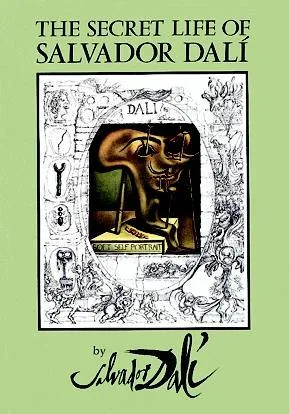
In this autobiography, Salvador Dalí chronicles his development from a precocious child in Catalonia to a central figure of the Surrealist movement. He details specific psychological fixations, such as his obsession with putrefaction, the "spectre" of his deceased older brother, and his intense sensory reactions to everyday objects. The narrative identifies the origins of his most famous motifs, including melting clocks and crutches, while recounting his expulsion from the San Fernando Academy and his subsequent creative evolution in Paris. He also documents his pivotal meeting and lifelong partnership with his muse, Gala.
Art historians and fans of the avant-garde read this volume to understand the internal logic behind Dalí’s eccentric public persona. It provides a primary source for studying the "paranoiac-critical method," a technique Dalí used to access his subconscious for visual inspiration. Readers gain a direct look at how a painter translates neurotic impulses and private dreams into disciplined representational art. The book serves as a technical manual for artistic self-mythologizing, showing how a creator constructs a personal philosophy from their own anxieties and hallucinations.
- Published
- 1942
- Language
- EN