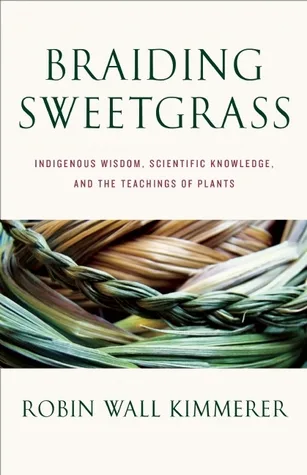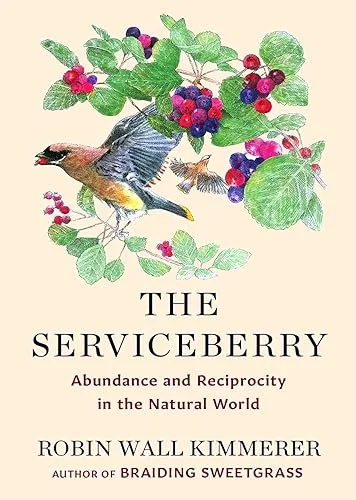
The Serviceberry: Abundance and Reciprocity in the Natural World
Robin Wall Kimmerer uses the reproductive cycle of the serviceberry shrub to contrast the mechanics of a gift economy against the logic of global capitalism. She describes how the plant overproduces fruit to ensure its own survival through the hunger of birds and mammals, establishing a biological framework of wealth based on distribution rather than accumulation. By analyzing the linguistic roots of indigenous resource management alongside modern market theories, Kimmerer identifies how scarcity is often manufactured. She argues that replacing competitive consumption with a model of mutual indebtedness can stabilize local ecosystems and human social structures.
Readers of natural history and ecological philosophy will find a practical application of Indigenous wisdom here. The text provides a specific vocabulary for those seeking to detach their personal ethics from consumerism. It appeals to people interested in permaculture, sustainable economics, and botany who want to understand the physical reality of interconnectedness. Instead of theoretical abstraction, the reader gains a blueprint for practicing gratitude and communal responsibility through the physical act of sharing resources within their own neighborhood and environment.
- Published
- 2024
- Language
- EN