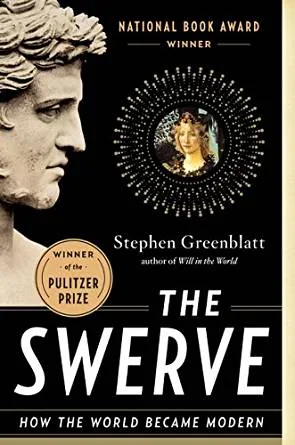
Stephen Greenblatt centers his narrative on Poggio Bracciolini, a fifteenth-century papal secretary and book hunter who discovered a rare manuscript of Lucretius’s "De Rerum Natura" in a remote German monastery. This ancient poem articulated Epicurean philosophy, asserting that the universe consists of atoms moving through a void and governed by chance rather than divine intervention. Greenblatt argues that the recovery of this materialistic worldview challenged medieval religious orthodoxy, fueling the intellectual shift toward the Renaissance and establishing the foundations for modern scientific inquiry and secular thought.
History enthusiasts and students of philosophy read this work to understand how specific archival discoveries can redirect cultural trajectories. The book appeals to readers interested in the transmission of classical knowledge and the mechanics of the Italian Renaissance. After finishing the text, a reader gains a clear perspective on the tension between Christian dogma and atomism. They walk away with a detailed account of how a single recovered poem introduced the radical concepts of hedonism and physicalism back into Western civilization.
Outward-looking; a moderate read.
Best for readers like The Evidence Seeker. Which reader are you?
- Published
- 2011
- Language
- EN