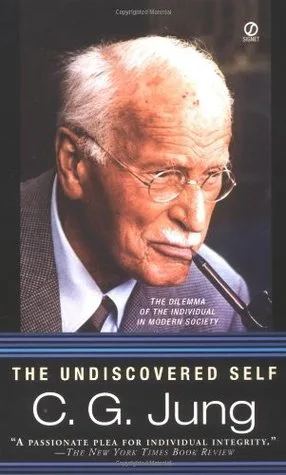
Carl Jung argues that the rise of the mass state threatens individual freedom by reducing the person to a statistical unit. He examines how modern man loses his sense of self when swallowed by large political systems and collective ideologies. To counter this, Jung proposes the process of individuation, where a person acknowledges their own psychological "shadow"—the hidden, darker unconscious impulses. He posits that without an internal spiritual foundation or a deep understanding of one's own psyche, the individual remains vulnerable to state control and scientific materialism.
Psychologists, social scientists, and students of political theory read this work to understand the link between internal mental health and global societal stability. The reader learns that external social change starts with internal self-reflection rather than mass movements. By the end, they grasp how personal responsibility and the recognition of private human nature serve as the final defense against authoritarianism. The text provides a framework for maintaining a distinct identity within an increasingly homogenized society.
- Published
- 1961
- Language
- EN