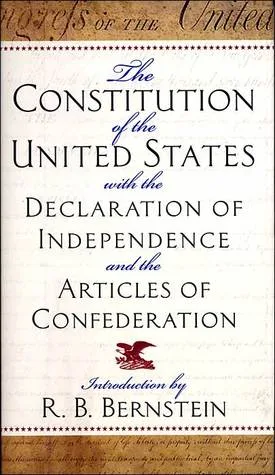
This document outlines the operational structure of the American federal government, dividing power between three distinct branches: the legislative, executive, and judicial. It establishes a bicameral Congress consisting of a Senate and a House of Representatives to manage national lawmaking and taxation. The text defines the specific duties of the President as commander-in-chief and the role of the Supreme Court in adjudicating legal disputes. It further delineates the division of authority between individual states and the central government through a system of federalism.
Students of political science and legal historians read this text to analyze the mechanisms of constitutional law and democratic governance. It serves as a study in institutional design and the separation of powers. Readers gain a technical understanding of the legal requirements for passing legislation, the process for appointing officials, and the methods for amending the national charter. The work provides the foundational rules for civic participation and the limitations placed on state authority within the United States.
Deep, outward-looking and clear-cut; a moderate read.
Best for readers like The Evidence Seeker. Which reader are you?
- Published
- 1787
- Language
- EN