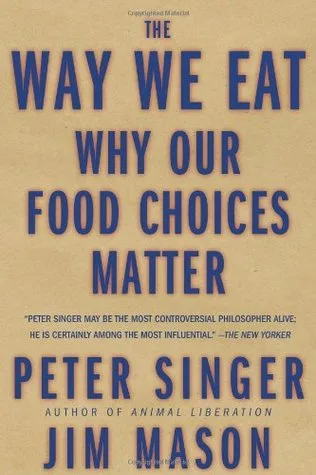
Peter Singer and Jim Mason track the origins of three families' groceries to examine the ethical consequences of industrial agriculture. They scrutinize intensive factory farming, the environmental costs of long-distance transportation, and the labor conditions of migrant workers. By visiting massive poultry facilities and organic cooperatives, the authors evaluate the morality of eating meat, the validity of "fair trade" labels, and the carbon footprint of out-of-season produce. They argue that individual consumption functions as a political act that either supports or challenges systemic cruelty and ecological waste.
This book is for consumers who want to align their daily dietary habits with their moral values. Readers seek specific criteria for judging animal welfare standards and the ecological impact of their supermarket trips. They walk away with a framework for evaluating labels like "cage-free" or "local" and practical strategies for reducing their participation in exploitative food systems. The text provides the necessary data to transition from passive eating to intentional, ethically informed shopping.
- Published
- 2006
- Language
- EN