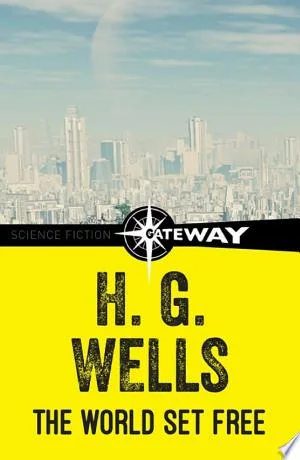
Written in 1914, this narrative predicts the discovery of artificial radioactivity and the invention of continuous atomic explosions. The plot traces the expansion of nuclear energy from a source of industrial power to a weapon used in a devastating global war that destroys major cities including Paris and Berlin. Wells describes the physical realities of radioactive fallout and the permanent heat of atomic bombs. Following this widespread destruction, a council of world leaders gathers in Brissago to abolish individual nation-states and establish a unified global government intended to manage resources and maintain peace.
Historians and fans of early science fiction read this work to examine the origin of the term atomic bomb and to see how accurately Wells anticipated mid-century geopolitical shifts. Readers gain a detailed perspective on the logic of internationalism and the belief that technological advancement necessitates a total reconstruction of social and economic systems. The text serves as a study of how scientific breakthroughs can force humanity into revolutionary governance structures. It provides a blueprint for a world state designed to replace the chaos of competitive nationalism.
Outward-looking; a moderate read.
Best for readers like The Systems Thinker. Which reader are you?
- Published
- 2017
- Publisher
- Hachette UK
- ISBN
- 9781473216952
- Language
- EN