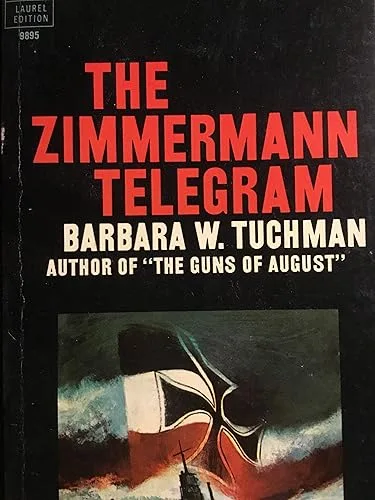
Barbara Tuchman examines the 1917 diplomatic crisis triggered by a secret German proposal to Mexico. She details how German Foreign Secretary Arthur Zimmermann promised the Mexican government the return of Texas, New Mexico, and Arizona if they joined the Central Powers during World War I. The narrative centers on British naval intelligence's interception of the coded message in Room 40 and the subsequent political maneuvering required to release the information without compromising British code-breaking capabilities. Tuchman argues that this specific telegram, rather than submarine warfare alone, shifted American public opinion toward abandoning neutrality and entering the conflict.
This book serves historians and readers interested in the mechanics of twentieth-century espionage and geopolitical strategy. It explains how unintended consequences of secret diplomacy can alter the trajectory of global wars. Readers gain a technical understanding of early cryptography alongside a chronological account of the Wilson administration’s decision-making process. The text demonstrates the direct link between intelligence gathering and executive foreign policy, showing how a single intercepted communication catalyzed the United States’ transition from an isolationist stance to a global belligerent.
- Published
- 1958
- Language
- EN
More by Barbara W. Tuchman
See all →

Readers also enjoyed