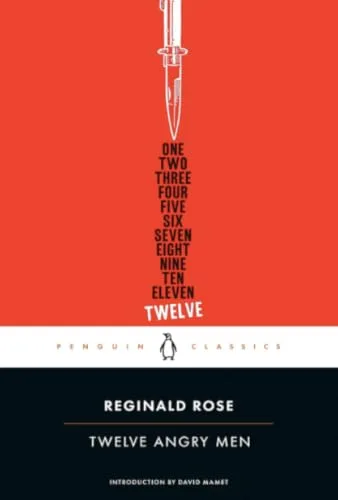
Reginald Rose’s teleplay centers on twelve unnamed jurors deliberating the fate of a nineteen-year-old boy accused of fatal stabbing. Set entirely within a cramped jury room during a summer heatwave, the narrative begins with a near-unanimous vote for conviction. The story tracks how Juror 8 utilizes the standard of reasonable doubt to challenge the prosecution’s evidence, specifically the reliability of eyewitness testimony and the uniqueness of the murder weapon. As the men debate, their arguments expose internal prejudices, class tensions, and personal projections that influence their interpretation of the law.
This text attracts readers interested in a microscopic view of the American judicial system and the psychological foundations of consensus. It is a study for those who examine how individual bias and group dynamics interfere with objective deliberation. Readers walk away with a functional understanding of how one dissenting voice can disrupt a majority through logical persistence. The work provides a clear framework for identifying how personal histories shape a person’s perception of guilt and innocence, making it a staple for students of rhetoric, law, and social psychology.
Thought-provoking; an easy read.
Best for readers like The Story Seeker. Which reader are you?
- Published
- 1954
- Language
- EN