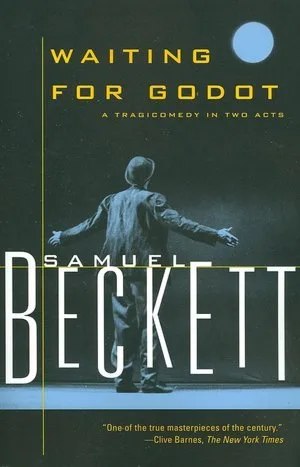
Two men, Vladimir and Estragon, stand by a leafless tree on a barren road. They engage in repetitive dialogue, trade insults, and struggle with their boots while waiting for a man named Godot who never arrives. Their isolation is briefly interrupted by the arrival of Pozzo, a traveler who drives his servant Lucky by a rope. Lucky delivers a frantic, incoherent monologue on theology and history before the pair departs. Each act ends with a messenger boy informing the protagonists that Godot will come tomorrow, leaving them to contemplate suicide before deciding to stay exactly where they are.
This play attracts readers interested in existentialism and the theater of the absurd. It serves those who want to examine the human dependency on hope and the circular nature of habit. Readers walk away with a stark perspective on how language often fails to convey meaning and how individuals invent routines to endure time. It provides a framework for understanding life as a series of pauses and false starts rather than a linear progression toward a specific resolution.
Deep, inward-looking, contemplative, open-ended and thought-provoking; a moderate read.
Best for readers like The Literary Connoisseur. Which reader are you?
- Published
- 1951
- Language
- EN