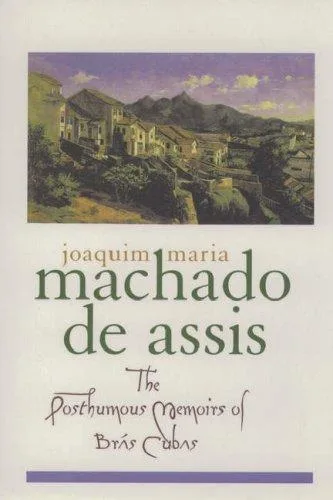
Brás Cubas begins his narrative after his death, writing as a deceased man who recounts his life from the grave. This structural choice allows him to criticize 19th-century Brazilian society without social risk. The story tracks his mediocre existence, from his spoiled childhood and academic failures in Coimbra to his long-term extramarital affair with Virgília. He details his unsuccessful political ambitions and his obsession with creating the Brás Cubas Poultice, a medicinal invention he hoped would grant him immortality. Ultimately, he calculates his life’s value through a sum of negatives, concluding that his greatest success was never having children and thus not passing on his human misery to any creature.
Readers interested in the intersection of psychological realism and cynical philosophy frequent this work to analyze the hypocrisy of the elite and the limitations of human ego. The text attracts those who appreciate non-linear storytelling and direct addresses to the audience. A reader finishes the book with a dark understanding of how vanity and boredom drive social status. It provides a technical template for the unreliable narrator, showing how personal bias distorts memory and historical truth.
Deep, open-ended and thought-provoking; a moderate read.
Best for readers like The Literary Connoisseur. Which reader are you?
- Published
- 1881
- Language
- EN