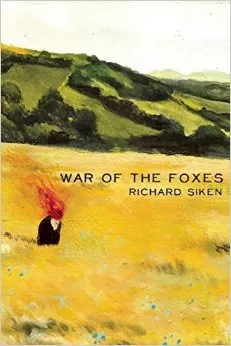
Richard Siken’s second collection centers on the act of painting as an anatomical struggle between the creator, the subject, and the representation. Through various poems featuring a painter named Pip and his fabricated subjects, such as foxes in a field or crows in a tree, Siken analyzes how logic fails to capture physical reality. The text details the mechanics of layering tempera and oil, the frustration of perspective, and the impossibility of making a static image behave like a living thing. These verses examine the relationship between the hunter and the hunted, treating the canvas as a site of strategic conflict where the artist attempts to pin down meaning through repeated strokes of color.
Artists and writers read this book to see the technical difficulty of representation deconstructed. It appeals to those interested in the philosophy of aesthetics and the failure of symbols to replace the objects they represent. Readers find a rigorous interrogation of how humans justify their observations and how an individual can exist within a world of their own making. By the final page, the reader understands the tension between a physical body and its artistic imitation, gaining a starker view of the labor required to translate thought into form.
Deep, inward-looking, contemplative and open-ended; a moderate read.
Best for readers like The Wisdom Collector. Which reader are you?
- Published
- 2015
- Language
- EN