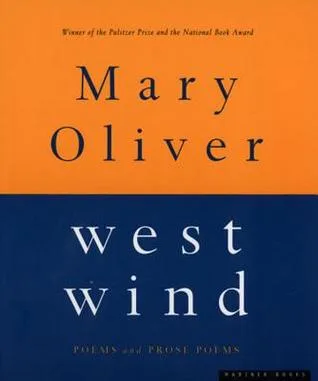
In West Wind, Mary Oliver focuses on the immediate physical realities of the Massachusetts coastline, documenting the behavior of goldfinches, foxes, and the shifting tides. The collection centers on a long title poem that functions as a series of diary-like entries tracking the seasonal transition into autumn. She examines the mechanics of human desire alongside the biological necessity of decay, using the titular wind as a literal force that shapes the landscape. Her observations link the act of looking at a grasshopper or a shoreline to the internal effort of maintaining attention in a distracted world.
This book serves readers who value precise natural history and quiet reflection. Those who study the intersections of biology and lyricism find here a model for translating visual data into concise language. The reader leaves with a clearer method for observing their own surroundings and a renewed focus on the cyclical nature of the environment. By highlighting the brevity of life through the lens of local flora and fauna, Oliver provides a framework for acknowledging mortality without sentimentality.
- Published
- 1997
- Language
- EN