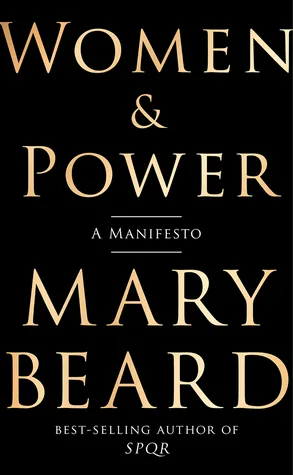
In this manifesto, classicist Mary Beard traces the historical roots of female silence back to ancient Greek and Roman literature. She analyzes how Telemachus’s rebuke of Penelope in the Odyssey established a cultural framework where public speech is defined as a masculine trait. Beard examines the persistent iconography of the silenced woman, from the literal tongue-cutting of Philomela to the modern use of Medusa’s severed head in political imagery. She argues that modern structures of authority remain modeled on classical patriarchy, forcing women to adapt to male templates of leadership rather than redefining what power itself looks like.
Readers interested in the intersection of ancient history and contemporary gender politics will find a historical map for why women are still coded as outsiders in public discourse. The text serves those looking to understand the mechanics of rhetorical exclusion and the persistent policing of female voices in digital and physical spaces. A reader finishes this essay with a clearer grasp of how Western civilization inherited its gendered speech norms and why simply adding women to existing hierarchical institutions fails to fix systemic inequality.
- Published
- 2017
- Language
- EN
More by Mary Beard
See all →
Readers also enjoyed