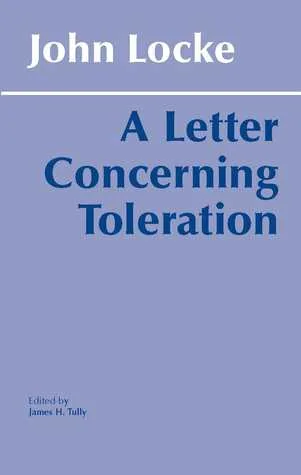
John Locke argues for the strict jurisdictional separation between the commonwealth and the church. He defines the state as a society established solely to preserve civil interests like life, liberty, and property, while the church is a voluntary society for the public worship of God. Locke asserts that the magistrate’s authority is limited to outward force, which cannot compel true inward belief. Consequently, religious diversity should be tolerated by the state, provided those beliefs do not undermine civil order or the sovereignty of the law.
Political theorists and historians read this text to understand the intellectual foundations of the secular state and individual liberty. The reader learns specific justifications for restricting government interference in private conscience and religious practice. By finishing the work, one gains a logical framework for balancing social stability with pluralism. It provides a historical perspective on how legal protections for minority groups became a central component of liberal governance and constitutional rights.
- Published
- 1689
- Language
- EN
Quotes by John Locke
More →No man's knowledge here can go beyond his experience.
An Essay Concerning Human Understanding
It is one thing to show a man that he is in error, and another to put him in possession of the truth.
An Essay Concerning Human Understanding
Wherever law ends, tyranny begins.
Two Treatises of Government