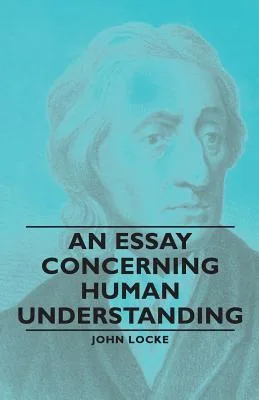
John Locke argues that the human mind begins as a tabula rasa, or blank slate, devoid of any innate ideas or principles. He asserts that all knowledge originates in experience, categorized into sensation of the external world and reflection on the mind’s own internal operations. The text breaks down ideas into simple units that combine to form complex concepts. Locke also distinguishes between primary qualities, like extension and motion, which exist in objects, and secondary qualities, like color and scent, which exist only in the perceiver.
Philosophers and students of cognitive theory study this work to understand the foundations of empiricism and the limits of human reason. Readers gain a framework for distinguishing between certain knowledge and mere probability in everyday judgment. The book provides a technical basis for questioning inherited prejudices by anchoring belief in sensory evidence. Those interested in the historical development of psychology find here the early mechanics of how humans perceive, name, and categorize their reality.
- Published
- 1690
- Language
- EN
Quotes by John Locke
More →No man's knowledge here can go beyond his experience.
An Essay Concerning Human Understanding
It is one thing to show a man that he is in error, and another to put him in possession of the truth.
An Essay Concerning Human Understanding
Wherever law ends, tyranny begins.
Two Treatises of Government