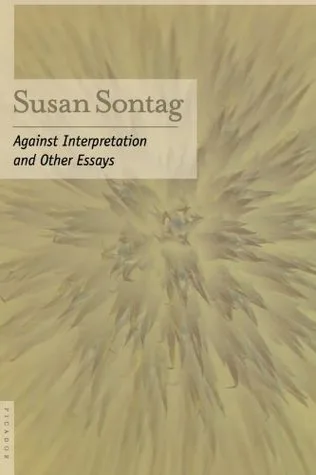
Susan Sontag rejects the traditional practice of mapping intellectual meanings onto creative works, arguing that over-analysis functions as a shadow world that smothers the art itself. The collection defends the sensory surface of a piece, championing "erotics of art" over a "hermeneutics" that tries to translate images into prose. Through critiques of French New Wave cinema, the theater of Artaud, and the aesthetic of Camp, Sontag analyzes how style operates as an autonomous force. She positions high and low culture on a shared spectrum, focusing on how a work acts upon the viewer rather than what it signifies.
Cultural critics, students of aesthetics, and artists read this book to understand the shift from literary moralism to modern formal analysis. The text provides a framework for evaluating film and pop culture with the same rigor once reserved for classical literature. Readers finish the collection with a vocabulary for discussing style as a deliberate choice and a method for engaging with the immediate, visceral impact of art. It serves as a guide for anyone looking to bypass academic allegory in favor of direct aesthetic experience.
- Published
- 1966
- Language
- EN
More by Susan Sontag
See all →
Readers also enjoyed