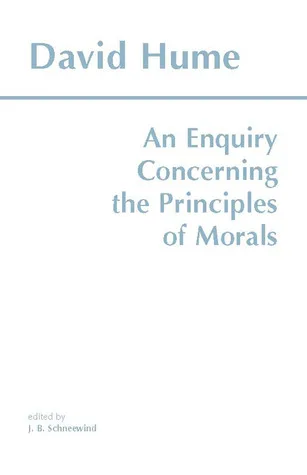
David Hume argues that human morality stems from sentiment rather than abstract reason. He identifies utility and social benevolence as the primary sources of moral approval, suggesting that we value character traits because they are either useful or agreeable to ourselves and others. Using a comparative method, Hume examines virtues like justice, fidelity, and generosity to show that our ethical judgments rely on a natural capacity for sympathy. He rejects the idea that divine law or logical axioms dictate right and wrong, placing the foundation of ethics in common human feelings and the practical needs of society.
This book serves students of moral philosophy and cognitive science who seek to understand the secular origins of ethics. Readers observe how social utility shapes legal and social norms, gaining a framework for analyzing behavior through the lens of emotional response rather than religious dogma. The text provides a clear explanation of how empathy functions as a social glue. By the end, a reader understands the mechanisms of merit and why certain actions elicit universal praise while others provoke instinctive blame.
- Published
- 1751
- Language
- EN