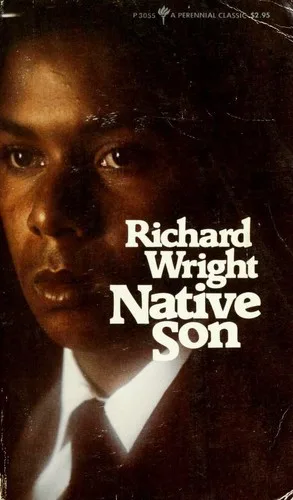
Richard Wright’s memoir documents his youth in the Jim Crow South and his eventual migration to Chicago. He details a childhood defined by chronic hunger, family instability, and the constant threat of racial violence. The narrative focuses on Wright’s intellectual isolation as he secretly secures library books and develops a sense of self that contradicts the subservient roles mandated by white supremacy. He analyzes the psychological mechanisms of systemic oppression, illustrating how fear and poverty shape personal identity and community interactions before he ultimately joins the Communist Party in a search for political clarity.
Readers interested in the intersections of sociology and personal history read this book to understand the specific mechanics of racial caste systems in mid-century America. It appeals to those studying the Great Migration and the development of African American literary naturalism. The text provides a rigorous look at how an individual maintains intellectual integrity while living under totalizing social control. A reader walks away with a concrete understanding of the physical and mental labor required to escape generational cycles of disenfranchisement and the role of literacy in achieving personal autonomy.
Deep, inward-looking and contemplative; a moderate read.
Best for readers like The Empathetic Explorer. Which reader are you?
- Published
- 1945
- Language
- EN