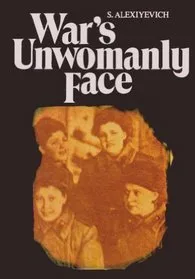
Svetlana Alexievich interviewed hundreds of Soviet women who served in the Red Army during World War II as snipers, tank drivers, pilots, and field surgeons. The text documents a specific female experience of war that emphasizes domestic details, the physical sensation of killing, and the psychological burden of returning to civilian life. These testimonies reveal how female veterans were silenced by official state narratives that prioritized heroic male archetypes over the visceral realities of hunger, filth, and menstruation on the front lines. The narratives detail the transition from teenage girlhood to mechanical combat roles, stripping away the romanticism usually found in Soviet military history.
This book serves historians, sociologists, and students of gender politics who require primary source accounts of the Eastern Front. Readers analyze how state-sponsored memory differs from individual recollection and how societal pressure forces women to hide their military participation to remain marriageable. The audience gains a technical understanding of the logistics of female mobilization and the lasting trauma peculiar to women in combat. One walks away with a reconstructed view of World War II that shifts the focus from grand strategy to the physiological and emotional toll of the battlefield.
Deep, inward-looking and contemplative; a moderate read.
Best for readers like The Empathetic Explorer. Which reader are you?
Insights from War's Unwomanly Face
“I didn't want to die with those ugly soldier's boots on.”
Women in the Red Army were desperate to find ways to feel human. They kept ribbons in their boots or grew flowers in the trenches.
“We did not tell anyone that we had been at the front.”
Coming home was often harder than the front lines. Neighbors and even mothers judged these women for being among men for so long.
“The sky was red... and the earth was red.”
War changes how you see the world's colors. One woman couldn't look at red sunsets because they looked like pools of blood.
“The soap was like stone.”
Laundry workers had hands that bled constantly from the lye and the heavy, frozen uniforms. They fought the war with soap and boiling water.
- Published
- 1983
- Language
- EN