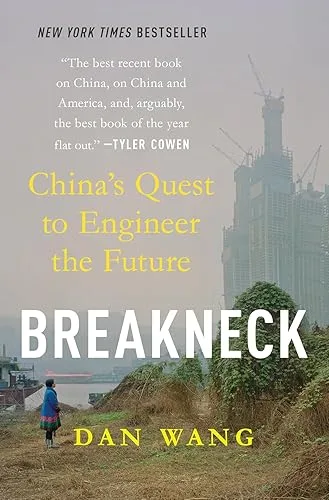
Dan Wang examines the specific industrial policies and engineering practices that fueled China’s transition from a low-cost manufacturer to a dominant force in high-end sectors like green energy, commercial aviation, and semiconductors. He analyzes the concept of "process knowledge," arguing that China’s advantage lies in the accumulation of tacit technical expertise gained through mass production rather than just theoretical R&D. The text detailing the integration of state-driven capital with private supply chains provides a technical look at how the country navigates trade restrictions to build domestic infrastructure.
Policy analysts, technology investors, and supply chain managers read this to understand the mechanics of Chinese industrial competition. Readers gain a clear view of how specific subsidies and talent pipelines operate in practice, permitting them to forecast shifts in global trade more accurately. The book provides a framework for evaluating the durability of manufacturing ecosystems and identifies which sectors currently resist or succumb to geopolitical decoupling efforts. It offers a practical perspective on the logistical and technical realities of modern state capitalism.
- Published
- 2025
- Language
- EN