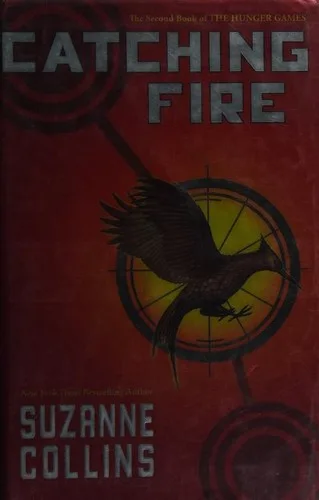
Catching Fire (The Hunger Games, #2)
After winning the Hunger Games through an act of defiance, Katniss Everdeen and Peeta Mellark return to District 12, but their safety is temporary. President Snow threatens Katniss’s family unless she stabilizes the unrest her victory sparked in the outer districts. For the seventy-fifth anniversary, known as the Quarter Quell, the Capitol forces former victors back into a high-tech jungle arena. Katniss must navigate clock-based lethal traps and form tactical alliances with older tributes while realizing her role as a symbol for an underground revolutionary movement.
Fans of dystopian survival and political intrigue read this to see the logistical escalation of state-sponsored violence and the internal mechanics of a rebellion. Readers gain a clear perspective on how propaganda functions to suppress dissent and the heavy psychological toll of constant surveillance. The story provides a detailed look at the transition from individual survival to organized resistance within a totalitarian regime, offering a gritty examination of sacrifice and systemic corruption.
Insights from Catching Fire (The Hunger Games, #2)
“I'm still having nightmares. Every night.”
Katniss survived the games but she never really left them. She still wakes up screaming in the dark. Victory didn't mean peace for her.
“I am not a star. I am a target.”
The Victory Tour felt more like a funeral than a celebration. Watching Katniss see the families of dead tributes was gutting. It shows how the Capitol uses grief as a weapon.
“I just want you to be happy.”
Peeta is the only person who treats Katniss like a human being instead of a symbol. He knows her favorite color is orange. He sees the girl behind the Mockingjay.
“I'm still betting on you, Girl on Fire.”
Cinna knew his designs would get him killed but he did it anyway. His gold dress for Katniss was a final act of defiance. He used art to start a fire.
- Published
- 2009
- Publisher
- Scholastic
- ISBN
- 9781407157870
- Language
- EN