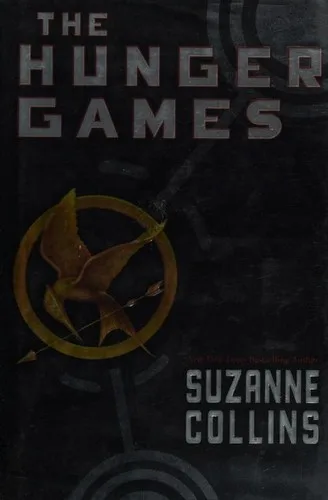
The Hunger Games (The Hunger Games, #1)
In the ruins of North America, the nation of Panem maintains control through a brutal annual pageant. Twelve districts must each provide two teenagers, a boy and a girl, to participate in a televised fight to the death. When her younger sister is selected, sixteen-year-old Katniss Everdeen volunteers as a replacement. To survive the wilderness arena, Katniss relies on her archery skills and forest instincts. She must navigate a landscape of lethal traps and hostile peers while managing a falsified romance designed to secure life-saving sponsorships from a wealthy, voyeuristic audience.
This book serves readers interested in social hierarchies and the ethics of media consumption. Young adult audiences find a blunt examination of survival mechanics and the psychological cost of state-mandated violence. The narrative provides a clear look at how propaganda shapes public perception and the way individual choices can inadvertently spark civil unrest. Readers walk away with a specific understanding of how resource scarcity and wealth inequality function as tools of political oppression and the strategic necessity of performative identity.
Insights from The Hunger Games (The Hunger Games, #1)
“I volunteer! I volunteer as tribute!”
Katniss volunteered for her sister without a single thought. It shows how love is mostly just an instinct to survive for someone else.
“I've been camouflaged. I'm a piece of the bank.”
Peeta used his art skills to hide in plain sight by a river. Even in a war zone, the things you did for fun might save your life.
“They're already taking bets on which tribute will die first.”
The people in the Capitol treat suffering like a reality show. It makes me wonder how much we ignore when the production value is high enough.
“Trust me. Just this once.”
Katniss used those berries to force a stalemate. She realized the only way to win a rigged game is to break the board.
- Published
- 2008
- Publisher
- Scholastic
- ISBN
- 9780439023481
- Language
- EN