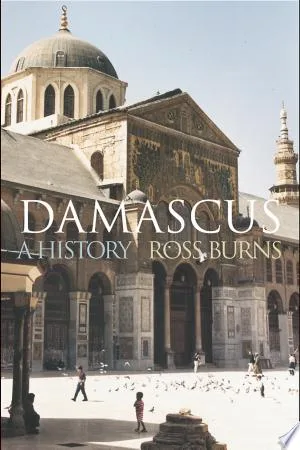
Ross Burns provides a chronological history of Damascus, focusing on how its urban layout and architectural layers reflect shifting political control. The narrative starts with Neolithic settlements and moves through the Aramaean Kingdom, Roman city planning, and the establishment of the Umayyad Caliphate. Burns details how the city’s physical fabric evolved under Byzantine, Mongol, and Ottoman rule until 1918. He specifically identifies how the Great Mosque and the straight street grid represent the fusion of Greco-Roman urbanism with Islamic societal requirements.
This volume serves historians and archaeology students looking for a technical record of one of the world’s oldest continuously populated sites. Readers gain a clear understanding of Middle Eastern geopolitics through the lens of a single urban center. The text provides the structural context needed to identify how various civilizations recycled masonry and adapted existing fortifications to maintain power. By the end, the reader can distinguish between the diverse Greek, Roman, and Arab architectural elements that define the modern city’s footprint.
Outward-looking; a moderate read.
Best for readers like The Evidence Seeker. Which reader are you?
- Published
- 2005
- Publisher
- Psychology Press
- ISBN
- 9780415271059
- Language
- EN