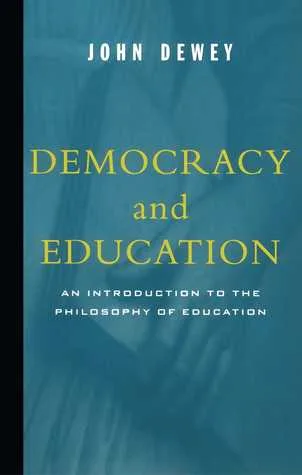
John Dewey argues that education is a social necessity used to maintain the continuity of life through communication. He asserts that a democratic society requires a specific mode of schooling that fosters shared interests and free interaction between groups. The text defines education as the reconstruction of experience, moving away from rote memorization toward a process where students learn through active participation in social environments. Dewey analyzes the relationship between biological development and cultural growth, emphasizing that schools function as simplified social communities where students develop the habits required for self-governance.
Teachers and philosophers study this text to understand the link between democratic participation and classroom structure. It is for those who want to move past the binary of traditional instruction versus total student freedom. Readers gain a framework for designing curricula that connect scientific inquiry with social responsibility. The book provides a technical vocabulary for discussing how vocational training and liberal arts can merge to create an engaged citizenry. Readers finish the text with a functional theory of how school environments shape the character of a secular society.
- Published
- 1916
- Language
- EN