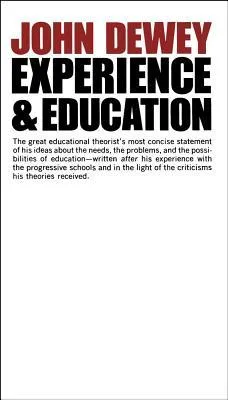
John Dewey presents a framework for balancing traditional, curricula-centered schooling with progressive, student-led instruction. He rejects the binary choice between strict authoritarian discipline and total student freedom, proposing instead a theory of experience based on continuity and interaction. Dewey argues that for an experience to be educational, it must connect to a student's prior knowledge and bridge toward future growth. He emphasizes the role of social control within the classroom, where the teacher acts as a guide rather than a lecturer, organizing activities that foster genuine intellectual inquiry.
This book serves educators, school administrators, and students of pedagogical theory. Readers use it to understand the psychological mechanisms behind how children learn through physical and mental engagement with their environment. It provides a technical vocabulary for evaluating instructional methods and classroom management styles. The reader walks away with a practical lens for diagnosing why certain lessons fail to engage students and how to structure school curricula around the principle of scientific observation.
- Published
- 1938
- Language
- EN