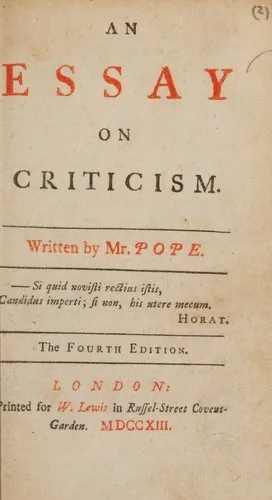
Alexander Pope’s didactic poem outlines a rigorous philosophy for aesthetic judgment based on the laws of Nature and the precedents of Classical antiquity. Written in heroic couplets, the text argues that effective criticism requires a balance of wit and judgment to avoid the pitfalls of pride and pedantry. Pope defines Nature as an unchanging, universal standard that poets and critics must follow, citing Homer and Virgil as the supreme models of these eternal rules. He addresses specific technical failures, such as focusing on flashy metaphors or rigid meter at the expense of the whole work's internal logic.
This work serves students of literary theory and writers seeking to refine their craft through neoclassical principles. Readers gain a framework for evaluating art that prioritizes clarity, moderation, and historical continuity over personal ego. The text provides specific maxims for distinguishing between superficial cleverness and lasting brilliance. By the end, a reader understands how to apply traditional standards to contemporary writing while maintaining the humility necessary for sound intellectual inquiry.
- Published
- 1711
- Language
- EN