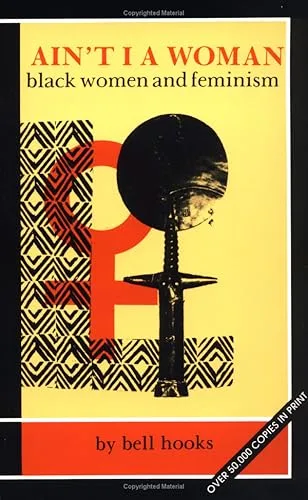
In this 1984 critique, bell hooks argues that mainstream feminist movement largely represents the interests of white, college-educated, middle-class women while ignoring the lived experiences of those on the margins. She identifies how the focus on equality with men within the existing social structure fails to address the interlocking systems of racism, classism, and sexism. hooks proposes a shift in perspective that places the experiences of marginalized women at the center of political theory. By examining the domestic sphere and labor markets through the lens of black feminist thought, she advocates for a collective movement aimed at ending all forms of oppression rather than seeking individual advancement.
Students of political science and activists interested in intersectionality read this book to understand how early liberal feminism excluded poor women and women of color. The text provides a framework for rethinking social hierarchies and collective action. Readers gain a specific vocabulary for analyzing how different types of discrimination overlap and reinforce one another. Those seeking to build inclusive movements use this work to identify and correct the exclusionary practices found in traditional advocacy groups, ultimately walking away with a clearer understanding of how to link gender justice with racial and economic equity.
Deep; a moderate read.
Best for readers like The Deep Diver. Which reader are you?
- Published
- 1984
- Language
- EN