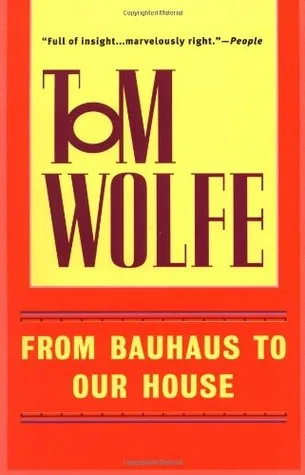
In this critique of twentieth-century architecture, Tom Wolfe argues that modern design became a captive of European intellectual theories rather than human needs. He tracks the arrival of Bauhaus founders Walter Gropius and Ludwig Mies van der Rohe in America, where their "International Style" replaced decorative craftsmanship with glass boxes and stark concrete. Wolfe examines how elite university faculty and "the compounds" of avant-garde intellectuals enforced a rigid rejection of bourgeois comfort. He describes the deliberate omission of color, texture, and ornament in favor of industrial uniformity and functionalism.
Readers interested in the intersection of sociology and urban design turn to this book to understand why modern offices and housing projects often feel alienating. The text appeals to those who enjoy social history written with sharp wit and a skeptical eye toward artistic orthodoxy. A reader walks away with a framework for identifying the European socialist origins of the American skyline. They gain an understanding of how architectural prestige became detached from the preferences of the people who actually inhabit and pay for buildings.
- Published
- 1981
- Language
- EN