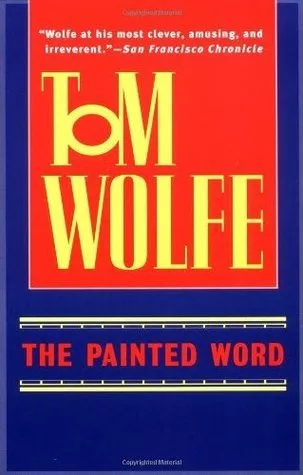
The Painted Word argues that modern art has abandoned visual experience in favor of complex literary theories. Tom Wolfe asserts that by the mid-twentieth century, movements like Abstract Expressionism and Pop Art became incomprehensible without the manifestos of influential critics like Clement Greenberg and Harold Rosenberg. He describes a closed loop he calls Cultureburg, where a tiny elite of collectors and gallery owners dictates taste. In this framework, the physical painting serves merely as an illustration for the written text that justifies its existence.
This book attracts readers interested in the social dynamics of the high-art market and those skeptical of avant-garde abstraction. It functions as a social history of the New York art scene, stripping away technical jargon to reveal the underlying prestige economy. The reader gains a cynical perspective on how institutional validation operates and learns to identify the shift from representational skill to conceptual posturing. It provides a toolkit for understanding why contemporary works often require a wall placard to be understood by the public.
Outward-looking; a moderate read.
Best for readers like The Evidence Seeker. Which reader are you?
- Published
- 1975
- Language
- EN